
Producto Digital
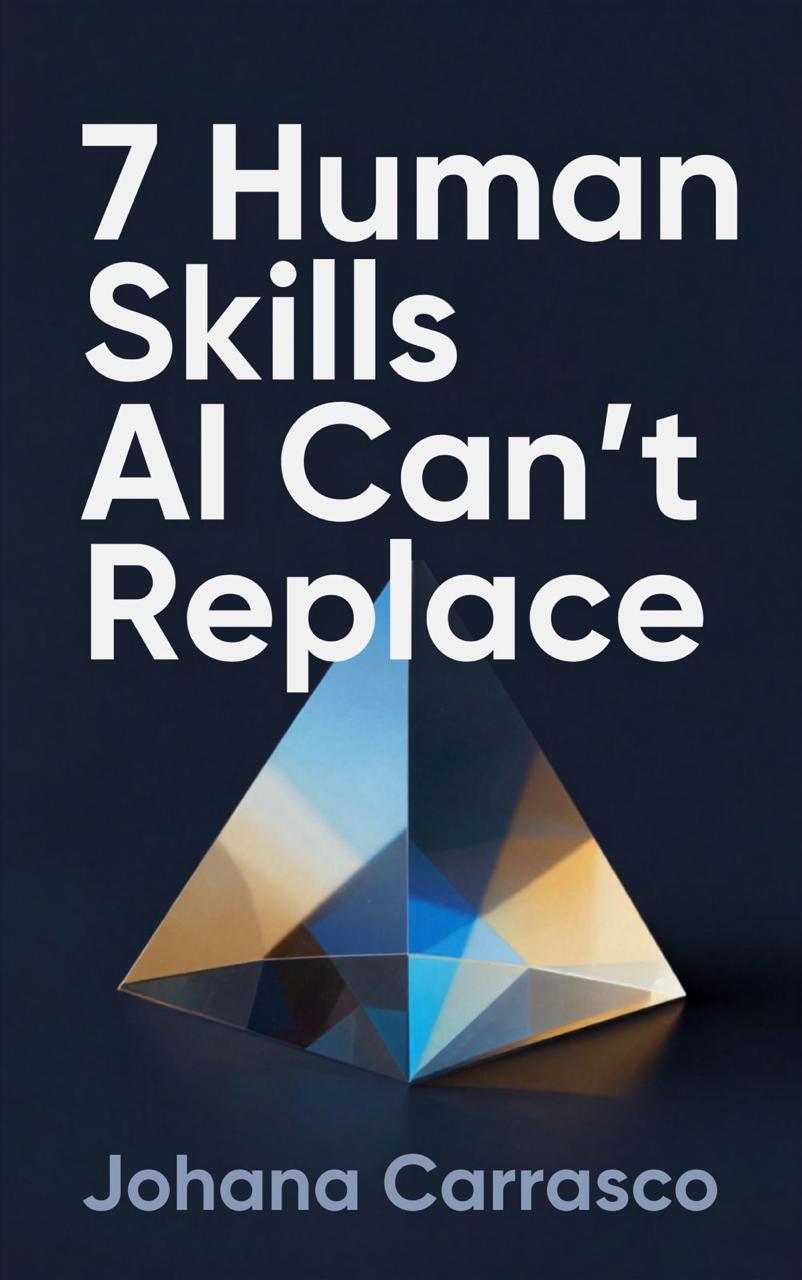
The 7 Human Skills AI Cannot Replace (INTERNATIONAL SALE)
Your value has no algorithm 19USD
$16.800 CLP
This book exists because no one was asking the right question
Everyone is talking about which tools to learn.
No one is talking about what kind of person to be.
The 7 Human Skills AI Cannot Replace is not a technology manual. It won't teach you to use ChatGPT or automate your business.
It shows you — with real evidence from international institutions — which 7 capabilities make you more valuable the further AI advances. And how to develop them.
AI is changing everything. Except one thing.
AI is changing everything. Except one thing.
You.
Over the past two years, companies like Amazon, IBM, and Workday eliminated hundreds of thousands of jobs. Not because of a crisis. Not because of a recession. Because of artificial intelligence.
And this is only the beginning.
The International Monetary Fund estimates that AI will affect 40% of all jobs worldwide. In developed economies, that number rises to 60%.
You've probably already felt it. That quiet sense that the ground is shifting slightly beneath your feet. That question that surfaces sometimes, almost in silence:
Am I replaceable?
The short answer is: it depends.
It depends on whether you know what AI cannot do.
Because there is something no language model, no algorithm, no automation system can replicate — not because it isn't advanced enough, but because it isn't technical.
It's human.
And that changes everything.
What the research found — and almost no one is saying
After months of research into reports from MIT, Stanford, the World Economic Forum, and PwC, one conclusion emerged that cuts directly against the collective panic:
AI doesn't replace people. It replaces functions.
And in doing so, it makes extraordinarily valuable the capabilities that algorithms cannot touch: your judgment, your empathy, your purposeful creativity, your capacity to act with ethics when no one is watching.
Skills you already have. Skills you are probably underestimating.
You.
Over the past two years, companies like Amazon, IBM, and Workday eliminated hundreds of thousands of jobs. Not because of a crisis. Not because of a recession. Because of artificial intelligence.
And this is only the beginning.
The International Monetary Fund estimates that AI will affect 40% of all jobs worldwide. In developed economies, that number rises to 60%.
You've probably already felt it. That quiet sense that the ground is shifting slightly beneath your feet. That question that surfaces sometimes, almost in silence:
Am I replaceable?
The short answer is: it depends.
It depends on whether you know what AI cannot do.
Because there is something no language model, no algorithm, no automation system can replicate — not because it isn't advanced enough, but because it isn't technical.
It's human.
And that changes everything.
What the research found — and almost no one is saying
After months of research into reports from MIT, Stanford, the World Economic Forum, and PwC, one conclusion emerged that cuts directly against the collective panic:
AI doesn't replace people. It replaces functions.
And in doing so, it makes extraordinarily valuable the capabilities that algorithms cannot touch: your judgment, your empathy, your purposeful creativity, your capacity to act with ethics when no one is watching.
Skills you already have. Skills you are probably underestimating.
¿Qué incluye este paquete?
Now let's put the price in perspective.
An AI course on Coursera or Udemy costs between $80 and $200. It teaches you tools that will be updated — or obsolete — before you finish module three.
One hour with a professional development consultant runs $100 to $300. A single hour.
A ticket to the latest innovation and future-of-work conference: $350, before flights and hotel.
This book is $19.
One time. No subscription. No fine print. No flights, no rescheduling, no commute.
And what it gives you is not a tool that changes every six months. It is clarity about what you already have — and what no software update can ever take away.
For $19. Less than dinner out on a random Tuesday night.
No-questions guarantee
If you read it and feel it wasn't worth it, reach out. Full $19 refund. No forms, no delays, no explanations needed.
That's how confident I am in what's inside.
[GET MY COPY — $19 USD →]
Secure payment via PayPal · Instant download
Available worldwide
An AI course on Coursera or Udemy costs between $80 and $200. It teaches you tools that will be updated — or obsolete — before you finish module three.
One hour with a professional development consultant runs $100 to $300. A single hour.
A ticket to the latest innovation and future-of-work conference: $350, before flights and hotel.
This book is $19.
One time. No subscription. No fine print. No flights, no rescheduling, no commute.
And what it gives you is not a tool that changes every six months. It is clarity about what you already have — and what no software update can ever take away.
For $19. Less than dinner out on a random Tuesday night.
No-questions guarantee
If you read it and feel it wasn't worth it, reach out. Full $19 refund. No forms, no delays, no explanations needed.
That's how confident I am in what's inside.
[GET MY COPY — $19 USD →]
Secure payment via PayPal · Instant download
Available worldwide